Benjamin Mitchell — CBT/REBT Therapist
About Benjamin
Most people who come to me have tried talking about it already.
Sometimes that was therapy that never quite went anywhere — fifty minutes of casting around for something to say, a lot of ground covered, nothing that changed by Monday morning. Sometimes it was years of working it out alone: the books, the podcasts, a genuinely impressive understanding of the problem, and no change in how it actually feels.
If that’s you, here’s the thing worth knowing. There is another way to do this, and it isn’t more talking. My work is structured, active, and pointed at what you actually want to change. We measure whether it’s working, session by session. You leave with tools.
Book a free 25-minute call
What I do, and who I work with
I’m a CBT/REBT therapist working with adults on anxiety, panic and intrusive thoughts, low mood, anger and irritability, perfectionism and procrastination, confidence, and grief.
Mostly I see capable people who are managing the rest of their lives perfectly well and have hit one thing they can’t get any leverage on from the inside. Sometimes it’s work — a promotion that inspires more dread than delight, a deadline that has started to feel like a threat. Sometimes it has nothing to do with work at all: a temper that shows up at home and nowhere else, panic attacks that stopped years ago but still quietly dictate which situations get avoided, a grief that hasn’t moved.
Grief is worth saying more about, because it doesn’t behave like the others. Since 2023 I’ve worked as a trained bereavement supporter with Cruse Bereavement Support, sitting with more than twenty people through loss — face to face, over Zoom, and on the phone, under monthly supervision. Some of that has been grief that arrived on top of earlier grief, or grief that has stopped moving years after everyone else assumed it had. Not all of it needs therapy. Some of it needs someone who won’t flinch, and won’t try to hurry it along.
Nobody arrives broken. They arrive stuck, which is a different problem and a much more solvable one.
I am an Anxiety UK Approved Therapist and deliver talking therapy services for the charity’s members and partner beneficiaries. I also volunteer as a Frontline19 Volunteer Therapist, providing free confidential talking therapy to NHS and frontline workers.
Credentials
Qualifications
- NCPS Accredited Registrant (NCS23-03006), qualified to provide CBT/REBT therapy
- Three-year CBT/REBT training at the College of Cognitive Behavioural Therapies (CCBT): Diploma in CBT/REBT (2023–24), Advanced Diploma in CBT/REBT (2024–25), Advanced Diploma in Integrative CBT/REBT (2025–26)
- Level 3 Advanced TEAM-CBT Therapist certification
- Primary Certificate in Single Session Therapy, with Professor Windy Dryden
- First-class Honours BA in Psychology, Flinders University of South Australia
Current affiliations
- Anxiety UK Approved Therapist
- Frontline19 Volunteer Therapist
- Trained bereavement supporter with Cruse Bereavement Support — a 45-hour assessed Core Curriculum, and 100+ supervised one-to-one hours with 23 clients since 2023
- Vice-chair and Facilitator of TEAM-CBT UK weekly training group
Experience
- 215+ supervisor-signed clinical hours across NHS, charity and private practice
- 550+ hours of crisis support with Shout UK, the text-based crisis line, between 2022 and 2025
I’m in regular clinical supervision, which in practice means your work gets more than one mind on it.
How the sessions actually work
I use David Burns’ TEAM-CBT framework. It’s structured without being rigid, and every part of it exists to answer a question you are entitled to ask: is this working?
- T — Testing. Brief questionnaires at each session, so we both see what’s shifting and what isn’t. No guessing, and no discovering six months in that we’ve been rowing in the wrong direction.
- E — Empathy. Before anything changes, you need to feel properly heard. Not nodded at — understood, in a way you’d recognise if I said it back to you.
- A — Agenda Setting. We get explicit about what you want to change and what it will genuinely cost. This is also where we take seriously the very good reasons you might have for not changing — which is usually the part that unlocks everything else.
- M — Methods. Fifty to a hundred practical techniques. We find the ones that work for you, and then we use them properly.
Many people get what they need in around six to twelve sessions. Some need fewer. Some are working on something bigger and stay considerably longer, which is a perfectly good outcome and not a failure. What I won’t do is keep you in an open-ended weekly appointment that nobody is measuring.
How I got here
I was the kid who programmed Apple IIe games to win primary school competitions, taught himself to juggle five balls, and rode a unicycle to school — then built his own five-foot version, because why not.
I studied psychology, and somewhere in the middle of it I came across Cognitive Behavioural Therapy. For me it was less an academic subject than a cheat code. I was the developer who could not start a conversation with someone he didn’t already know, with a generous side order of perfectionism and procrastination. CBT is the reason I eventually could. It’s why I’ve spoken at international conferences, and it’s why I started the conversation with the woman who is now my wife.
Then I spent thirty years in technology. An MBA in e-commerce, back when everything had an “e-” bolted to the front of it — e-business, e-marketing, e-toothbrush. Software engineer through to Partner at Equal Experts and General Manager at Kevel, by way of large digital transformation programmes for HMRC and John Lewis. I went from coding in my bedroom to board meetings in the tallest buildings in San Francisco, where my team’s monthly bills topped a million dollars. The view was spectacular, the responsibility was terrifying, and the coffee was surprisingly mediocre.
Then I did the thing that made my colleagues’ faces twitch with confusion, and left. Not to retire and complain about the youth — I booked myself into CBT training instead and requalified as a therapist.
Two things from that career carry over. The first is that I spent decades in genuinely high-pressure work, so if your world is deadlines, difficult stakeholders, feeling like the least qualified person in a room full of people who seem to know more than you, or the sick certainty that you’re about to be found out, none of that needs explaining to me. If you happen to work in tech, you’ll find there’s no translation layer at all. The second is a stubborn habit of insisting on evidence — which is precisely what a therapy that measures its own results asks of you.
A lot of what I do comes down to the rules people set for themselves without ever quite deciding to. I must never make a mistake. I should know this already. I ought to be further along by now. Most people I see are carrying a few of these around. Almost nobody has ever said them out loud, to anyone, before.
The human behind the credentials
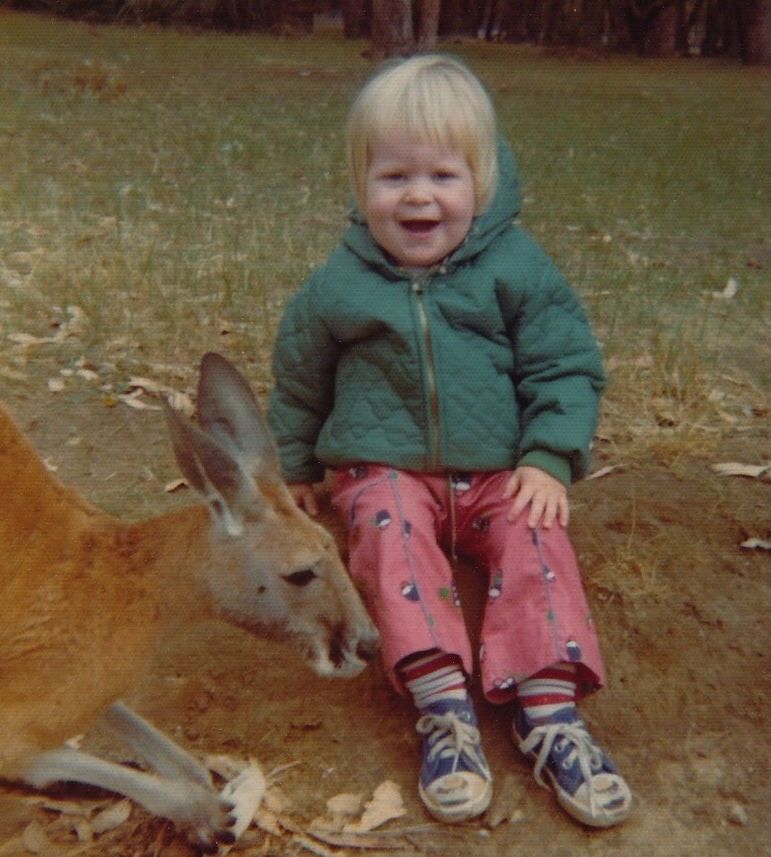
When I’m not working, I’m probably:
- Tending my kombucha and kefir like temperamental children (they’re alive! They have needs! They get moody!)
- Hosting pizza nights at the allotment, attempting casual conversation while frantically fussing over my Ooni oven like a Victorian steam train conductor — more wood! She’s losing heat in the back corner!
- Losing a long and undignified war against mare’s tail weeds, also at the allotment
- Walking the Thames taking photographs as though I’ll one day publish a weather calendar
- Building visualisation tools to track my therapy training hours, because you can take the man out of kanban but you’ll never pry the sticky notes from his cold, dead hands
Leaving corporate life was supposed to mean freedom from work. It turned out to mean freedom to choose the work. This is what I picked.
If any of this sounds like the kind of help you’re after, the next step is a conversation, not a commitment.
We’ll use it to work out whether I’m the right person for what you’re facing. If I’m not, I’ll do my best to point you somewhere better.